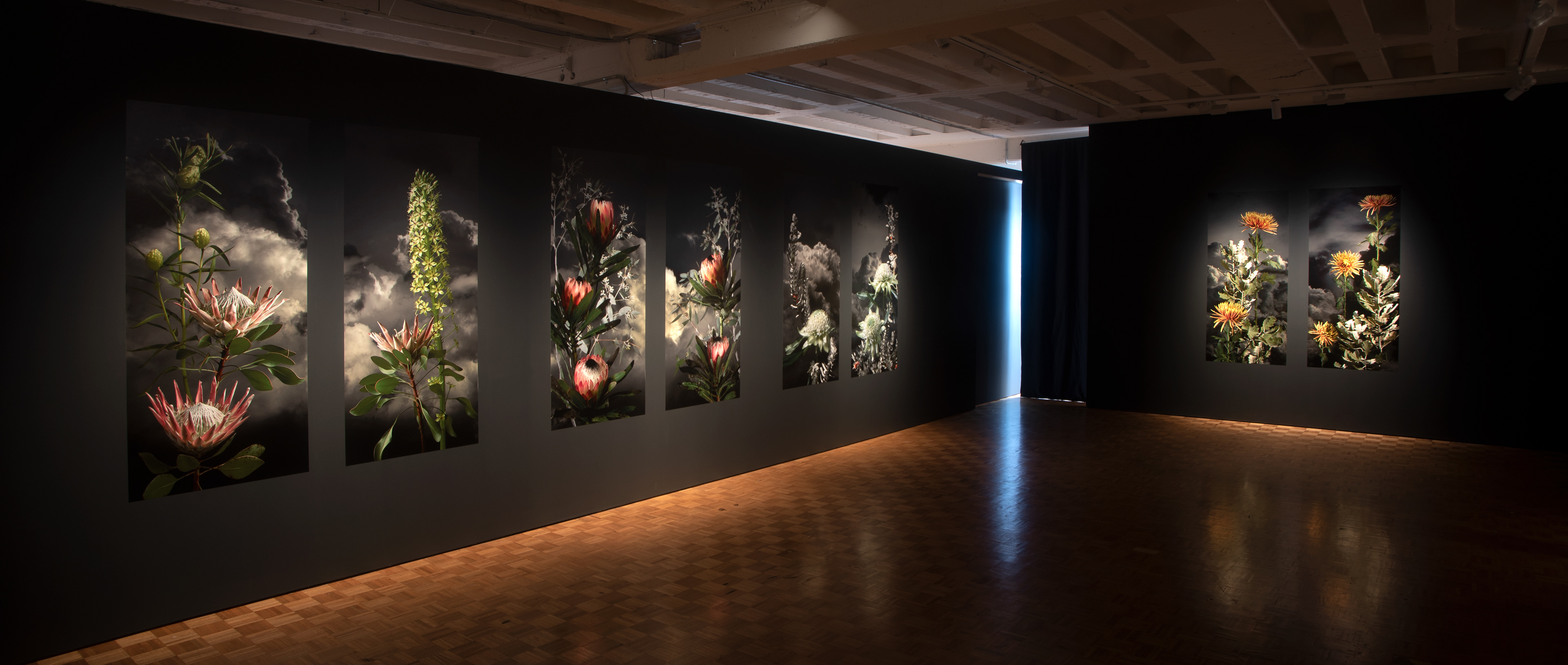
SCROLL DOWN FOR MORE IMAGES
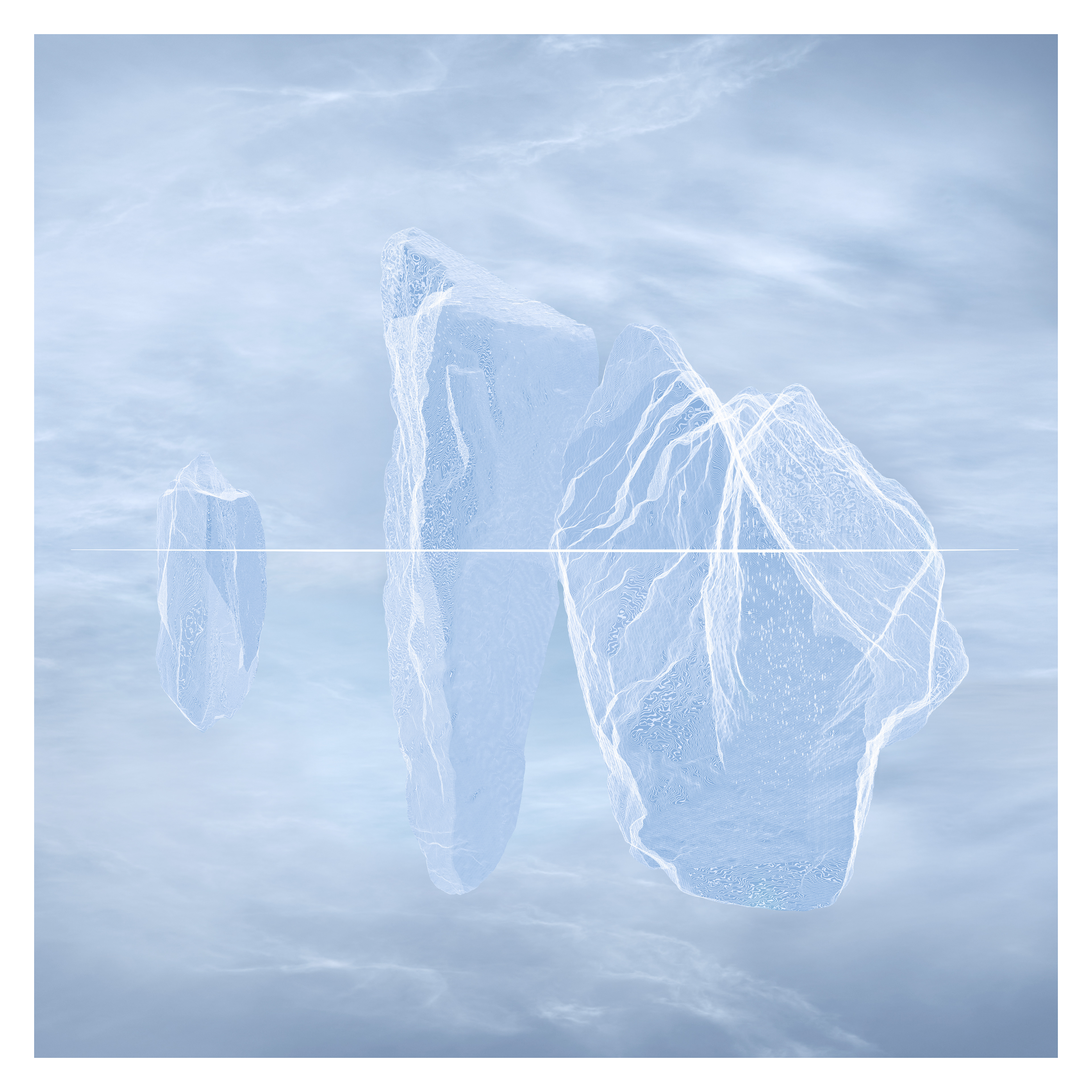
DEPTH #2
Created through conducting CT scans of common garden rocks, processed using the ‘lung’ setting of medical imaging software and reimagined as floating nets of fine lines resembling icebergs, ‘Depth #2’ explores the intersecting point between different imaging processes - photography and radiography, and between different systems of thought - art, science and geography. Science can give form to the unseeable, whilst art gives visual form to ideas. Using a diagnostic tool for the human body to reimagine a distant Antarctic landscape collapses the distinction between human anatomy and geological time, and highlights how inextricably bound we are, collectively and personally, to the survival of the natural world.
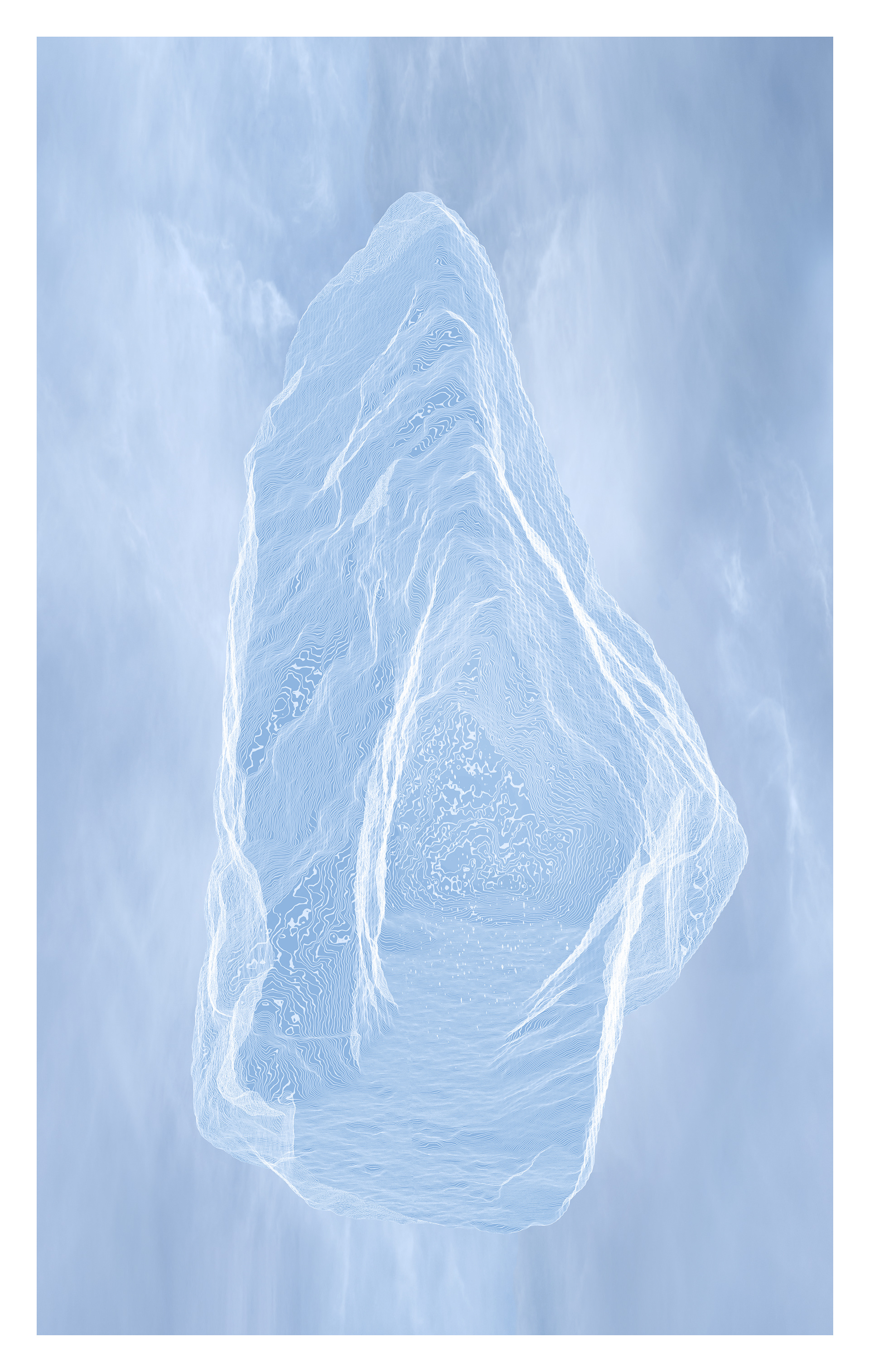
MELT #1
Melt #1 evokes the mass, solidity and permanence icebergs, now increasingly vulnerable, fragile, and disappearing. Created through conducting CT scans of common garden rocks, processed using the ‘lung’ setting of medical imaging software and reimagined as a floating icy form before an image of falling water. The work explores an intersecting point between different imaging processes - photography and radiography, and between different systems of thought - art and science. Using a diagnostic tool for the human body to reimagine a floating/falling landscape blurs the distinction between human anatomy and geological time. It highlights how inextricably bound we are, collectively and personally, to the survival of the natural world.
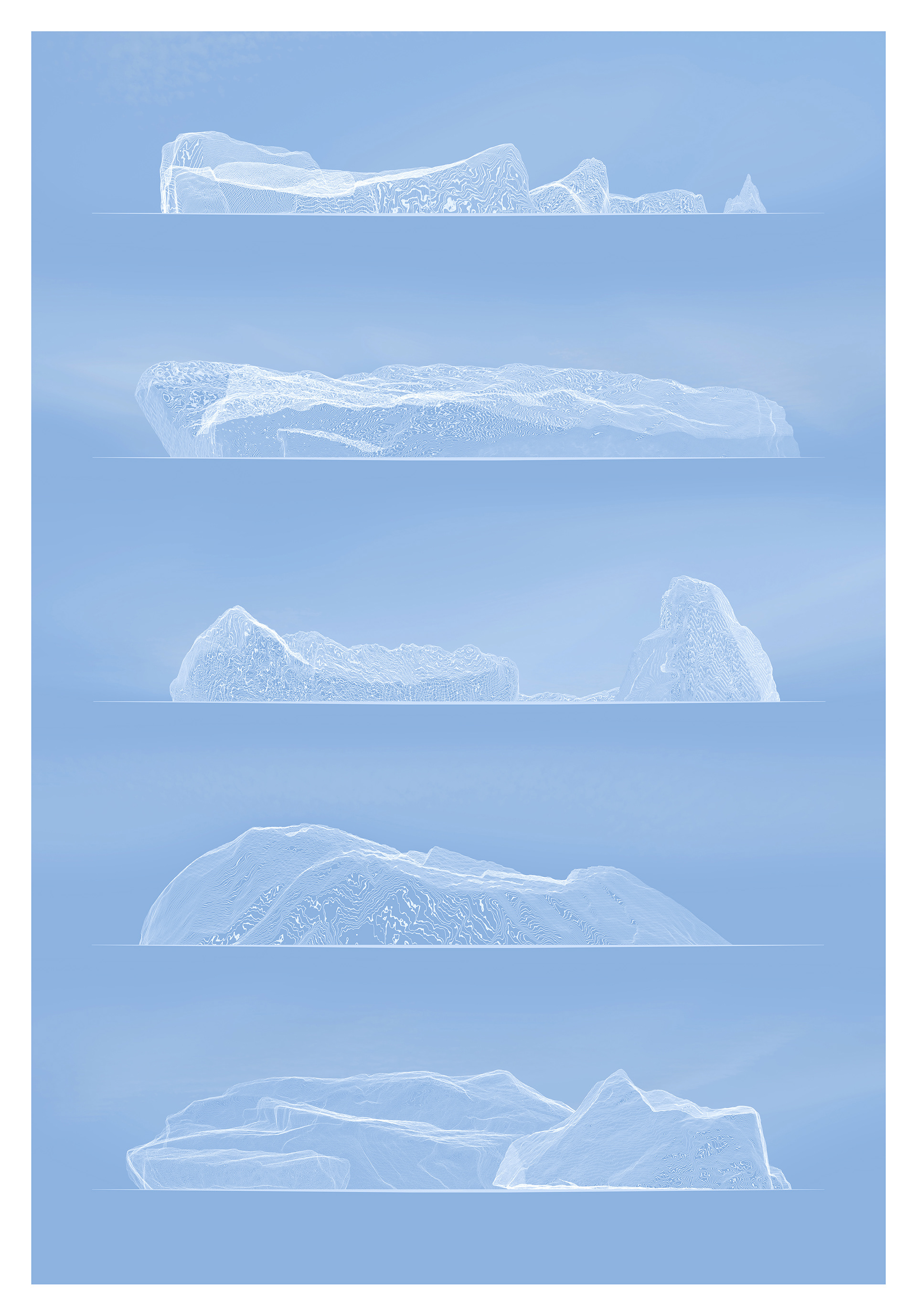
THE LONG VIEW #2’
‘The Long View #2’ was created through assembling CT scans I conducted of common garden rocks, processed using the ‘lung’ setting of medical imaging software and reimagined as floating nets of fine lines resembling icebergs. Referencing 18th century French cartographer Beautemps-Beaupre’s illustrations of ‘Van Diemen’s Land’ coastal landforms, the work explores an intersecting point between different imaging processes - photography and radiography, and between different systems of thought - art, science and history.
Using a diagnostic tool for the human body to reimagine a distant landscape collapses the distinction between human anatomy and geological time and highlights how inextricably bound we are, collectively and personally, to the survival of the natural world.
Memento Spiritum
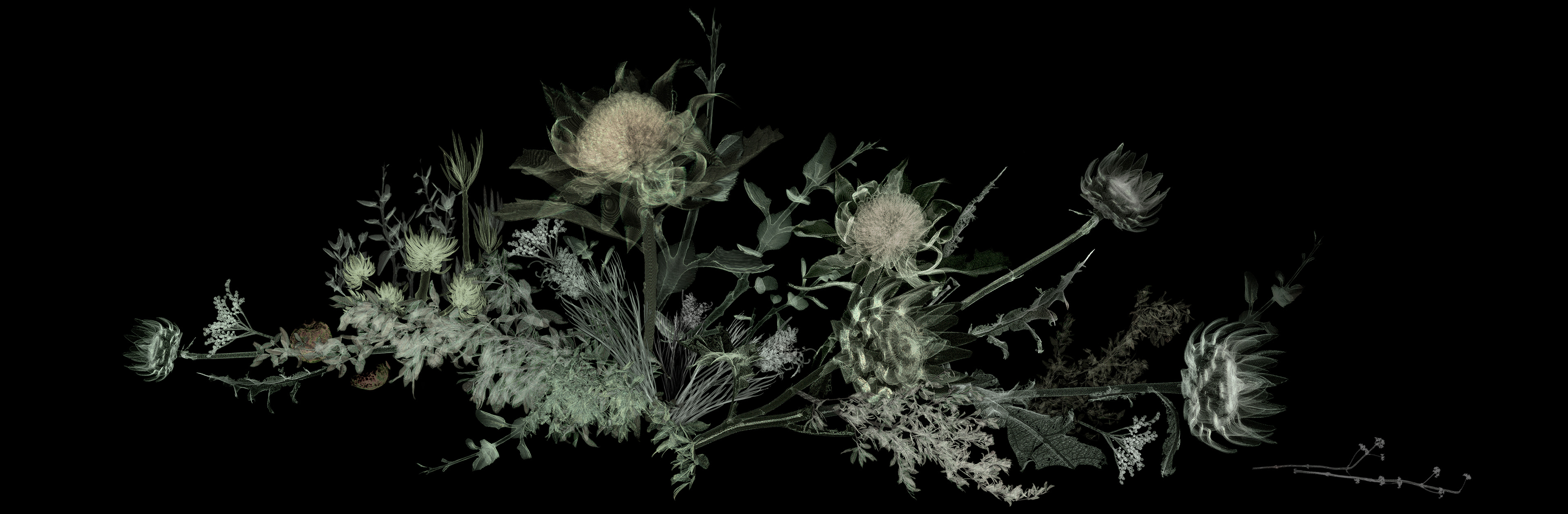
Memento Spiritum (Remember Breath), was created through assembling CT scans I have conducted of plants. The scans were then processed using medical imaging software to create a still life, a genre the explores the transience of life and inevitability of death, draws attention to how inextricably bound we are with the life and death of plants. They are the respiratory system of the planet. Vulnerable, ephemeral and beautiful. The presence of the pomegranate nestled in the bottom left of the image is a symbol of fertility and a reminder of the resilience of nature. It is a symbol of hope.
POMEGRANATE
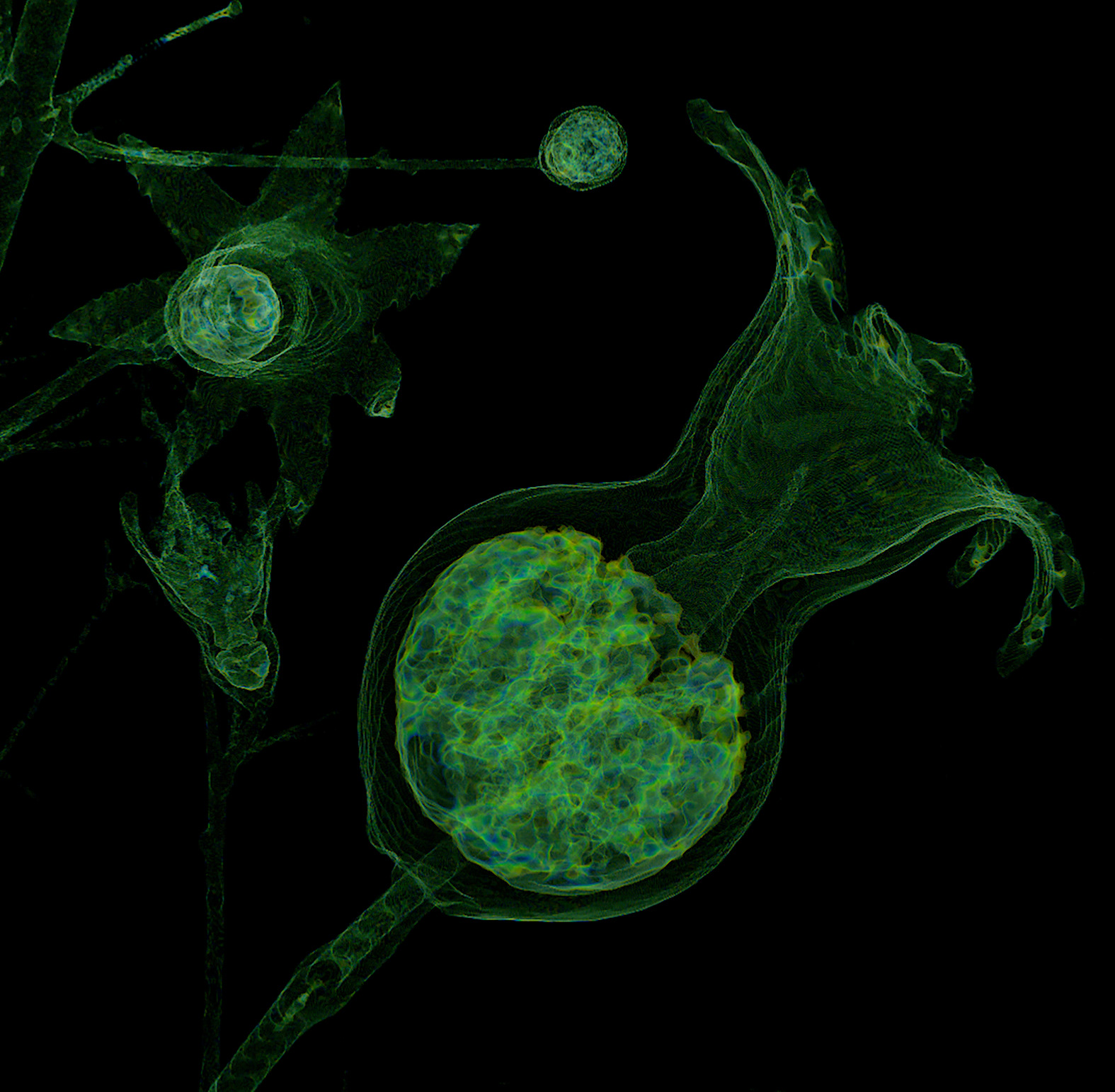
Work in progress. Example of MRI scan of a pomegranate.
UNDERSTORY
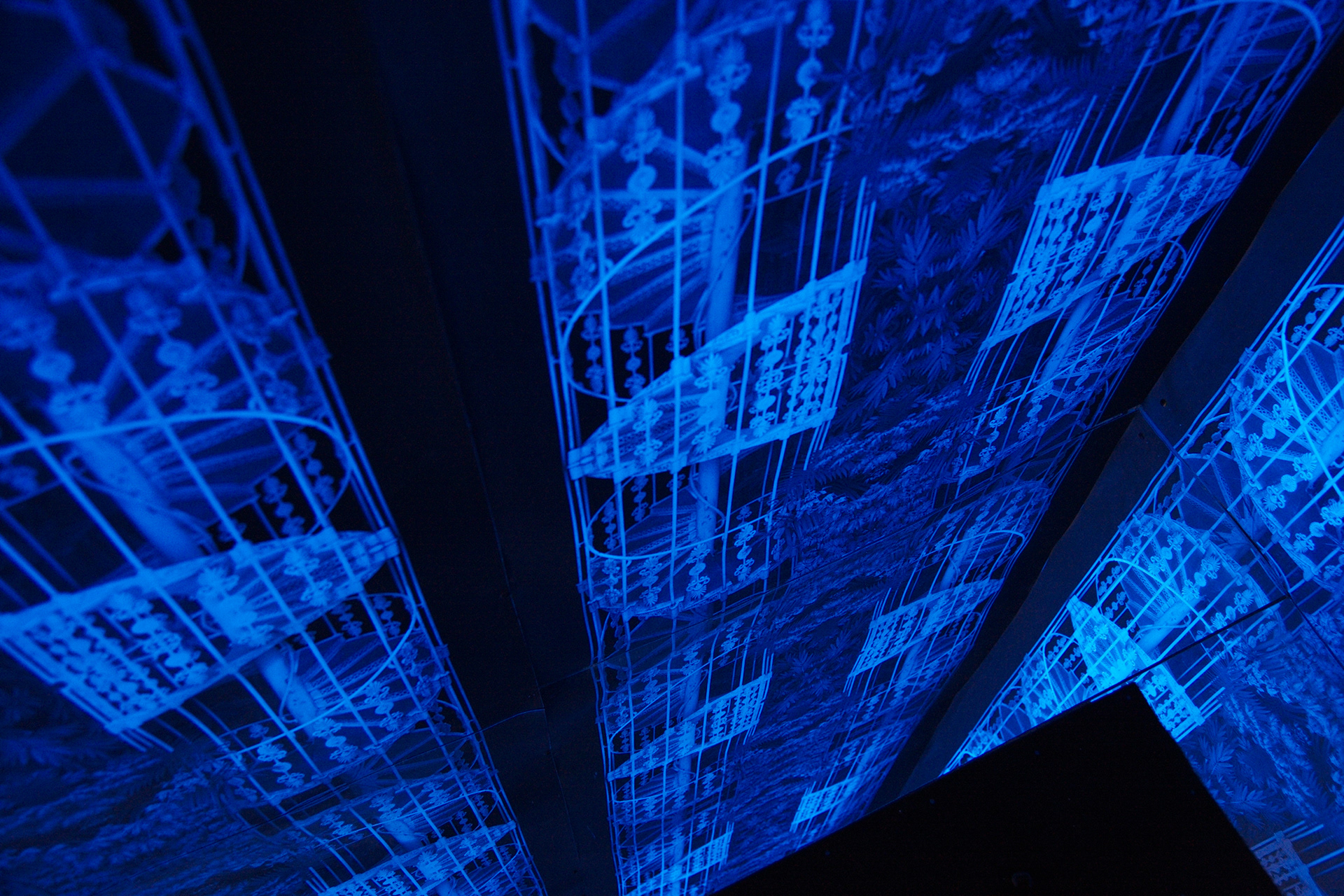
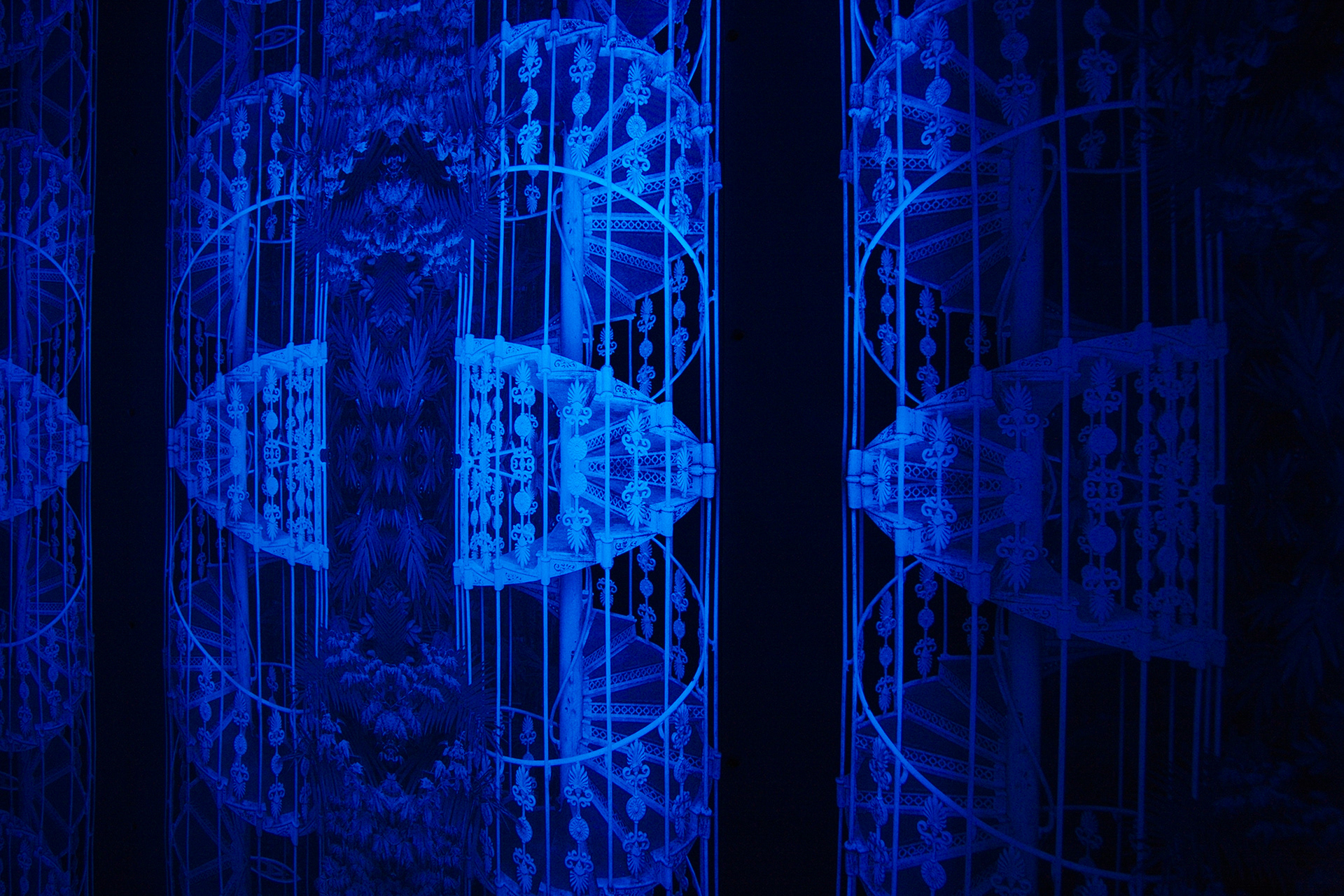
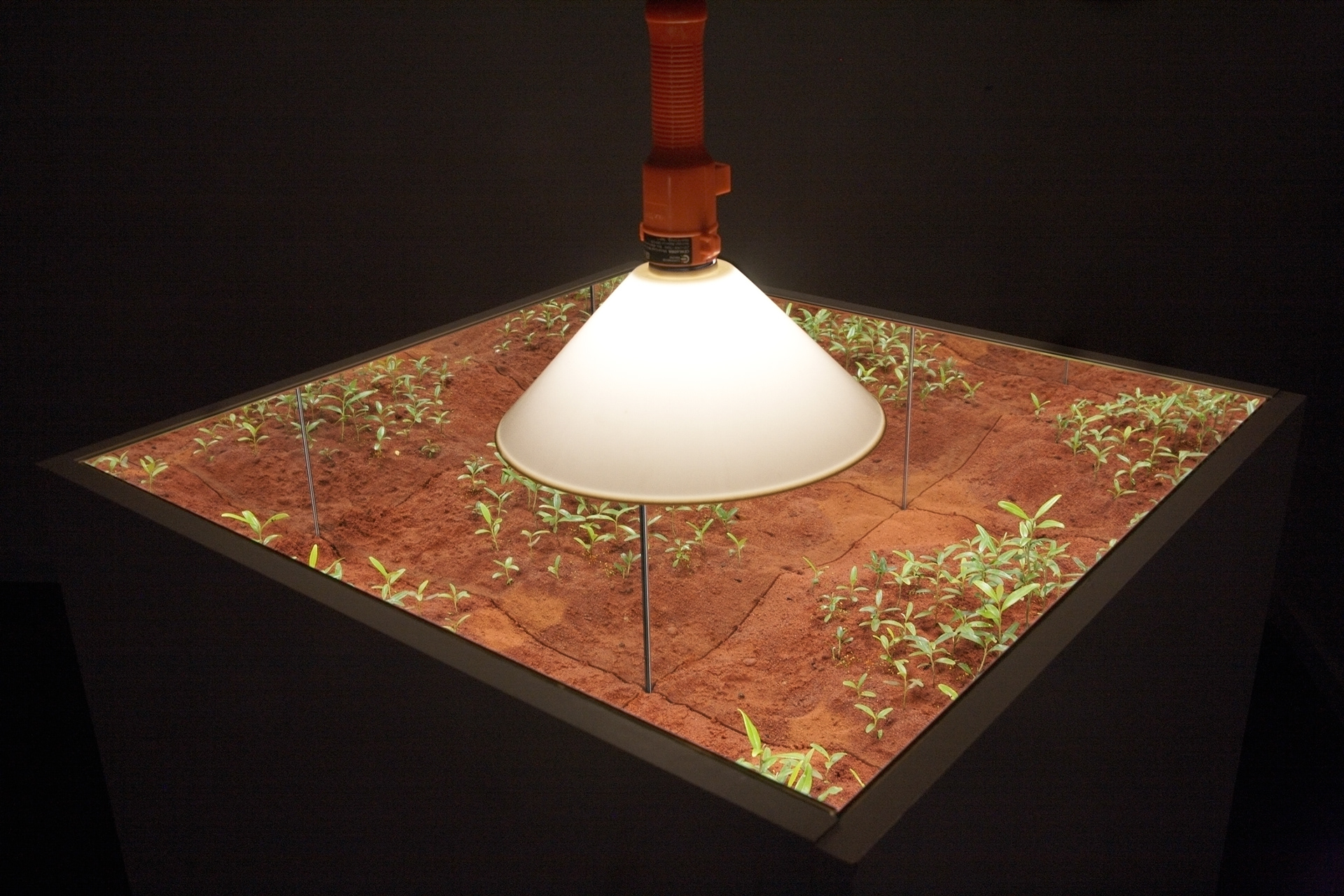
Understory was an experimental installation at Sutton Gallery Project Space. It stemmed from research conducted on the collections and architecture of key European Museums and sites. Specific references include spaces such as greenhouses and glass houses, where living things are protected in man-made structures; and the notion of infinity, with Sparks installing a mirrored room that gives the illusion of the floor plummeting endlessly below.
The works make particular reference to the lavish interiors of the Kew Gardens Glasshouse, with its exquisite spiral staircase. The constructed spaces presented explore and expand on Sparks’ journey into these glasshouses - eluding to not only their interior architecture, but also their purpose to preserve and protect.
A display case lined with mirrors mimics the infinite repetition of propagation and the global replication of environments designed to protect botanical specimens. The rare plant featured, Nematolepis Wilsonii, was presumed extinct in the wild after Victoria’s Black Saturday fires of 2009. Two months prior to the fire, the Victorian Conservation Seed bank collected from the one known site where they had grown naturally. Seeds were passed on to both the Melbourne Botanical Gardens and the Kew Gardens Millennium Seed Bank for cultivation, in order to restore the population in the wild. Remarkably, one year after the fires the plant regenerated out of earth that had been incinerated to a depth of 1 meter. This plant’s recent history tells a story of vulnerability, survival, recovery and resilience, throughout which human intervention is key factor.
SANCTUARY - FLORAL SERIES
‘Sanctuary’ provides the over-arching concept for a new long-term project. It refers to both the idea of a sanctuary as a space for us to dwell in, as well the spaces people create to provide safety and protection for plants. I am interested in the role the relationship between art and science plays in this symbiotic relationship. These floral panels are the first works to emerge from this project and my ongoing residency with Melbourne florist Flowers Vasette. This project also involved researching and exploring the lives of key women botanical artists, including Ellis Rowan, Marianne North and Louisa Anne Meredith, who made significant contributions to our understanding of bio-diversity.